
01
NMDA receptor function
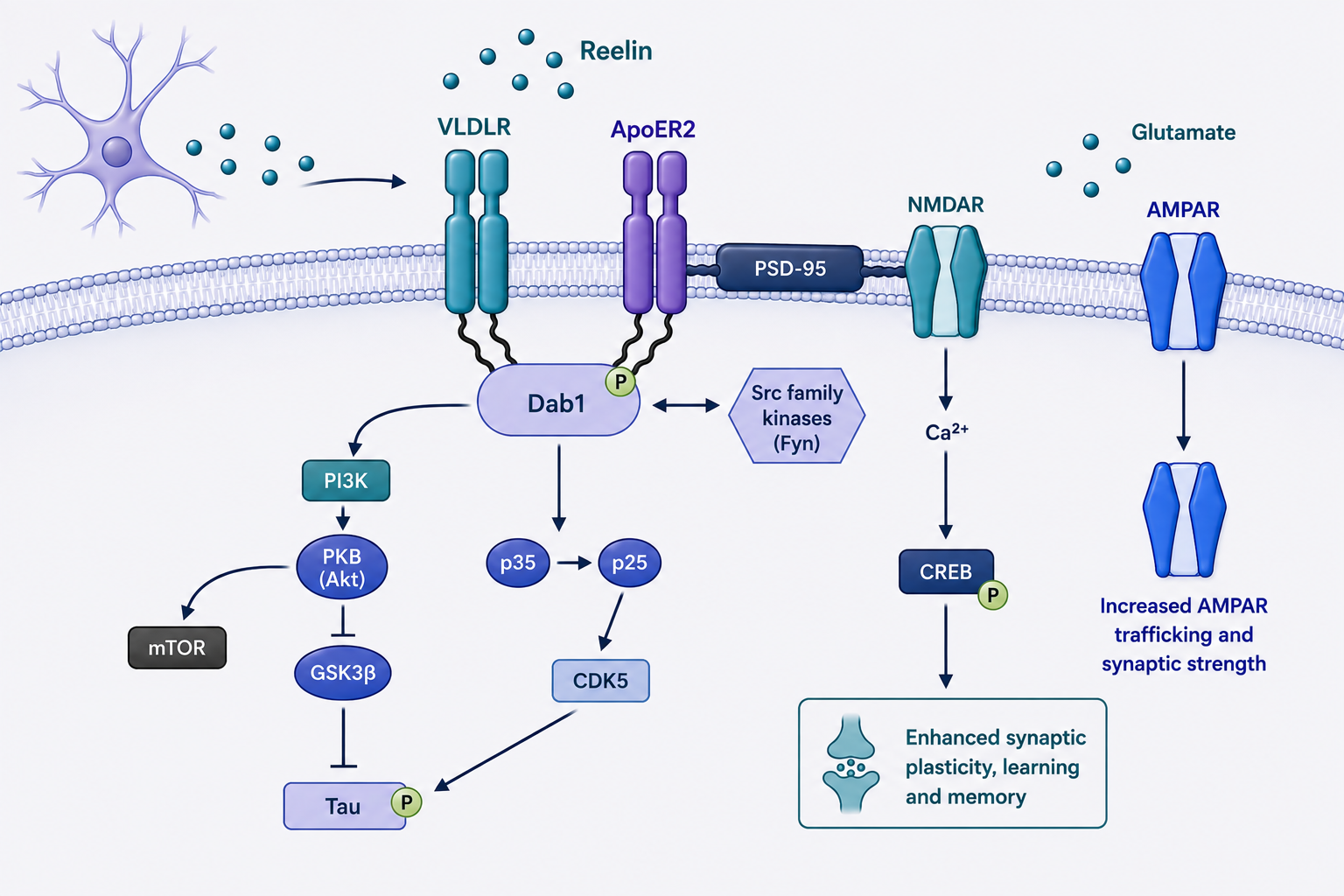
Reelin signaling enhances NMDA receptor activity through Src-family kinases, supporting synaptic plasticity and learning.
The science
Reelin is a large extracellular signaling protein with a fundamental role in the development and function of the brain.
While historically recognized for its role in neuronal migration during development, research over the past several decades has established an important role for reelin throughout adulthood, particularly in the hippocampus and other brain regions critical for learning and memory.
Coordinating the biology of cognition
Reelin binds the ApoER2 and VLDLR receptors at the neuronal surface, activating intracellular signaling through Dab1 and downstream pathways that regulate multiple components of synaptic function.
Through these interconnected signaling networks, reelin supports:
Reelin signaling enhances NMDA receptor activity through Src-family kinases, supporting synaptic plasticity and learning.
Reelin regulates AMPA receptor trafficking and insertion at the synapse, helping strengthen synaptic connections.
Reelin promotes the formation and stabilization of mature dendritic spines required for effective neuronal communication.
By coordinating receptor signaling and structural changes at the synapse, reelin supports long-term potentiation and adaptive neural circuitry.
Reelin-associated signaling contributes to neuronal survival, maturation, and adult hippocampal neurogenesis.
The science: how it works
Reelin activates ApoER2/VLDLR receptors, engaging Dab1 and downstream signaling that enhances synaptic function and supports learning, memory, and circuit balance.
Helps brain cell connections grow and stay stable
Helps brain cells send signals more efficiently
Supports the cells that keep brain activity in balance
Lets brain circuits adapt in useful ways, without unhelpful changes
Encourages new cells in the memory center supporting learning and memory
Why it matters
Reelin helps repair the network and connectivity, not just treat symptoms
Why reelin?
Many neurological and neuropsychiatric diseases involve disruption across several of these processes simultaneously.
Traditional therapeutic approaches frequently target one downstream receptor or signaling pathway. Reelin provides an opportunity to intervene further upstream and influence multiple converging mechanisms that collectively support cognition and healthy neural circuit function.
Reelin does not represent a single downstream target. It is a biological signaling network with the potential to restore coordinated synaptic function.
A focused reelin platform
There is no single way to harness reelin biology therapeutically.
Avendia is developing complementary approaches that allow us to match the therapeutic strategy to the biology and clinical needs of each disease.
Our platform includes approaches designed to activate endogenous reelin signaling or provide sustained reelin pathway activity.
Explore the pipeline